Holocaust Education & Archive Research Team |
|
Belzec
Belzec Images Transports Belzec Articles ---------------------------
A-R Leadership
A-R Articles
Action Erntefest Modern Research
| |||
The Belzec Death Camp
The death camp at Belzec was located in South Eastern Poland, within the Lublin District, near the remote village of Belzec, on the Lublin – Lvov railway line.
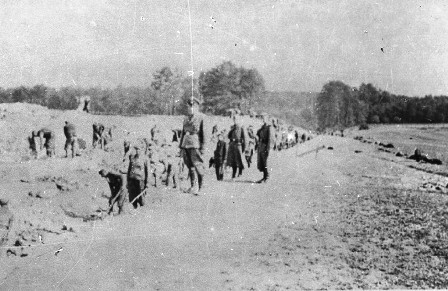
In early 1940 the Germans set up a number of labour camps in and around Belzec, housing workers building the so-called “Otto Line,” a series of fortifications on the border with the Soviet Union. These Jewish labour camps were disbanded in October 1940.
The death camp was not part of, nor converted from any other recognised camp facility. The death camp was built as part of Aktion Reinhard, solely for the extermination of the Jews.
Belzec was chosen as a death camp purely for logistical reasons, Belzec railway station was connected with the railway centre in Rawa Ruska (now in the Ukraine), located 14km from Belzec. The main railway lines from Lvov, Stanislawow in the East, and from Rzeszow, Przemysl, Tarnow and Krakow in the South West all passed through Rawa Ruska.
The site chosen for the death camp was on a railway siding, about 400 meters from the Belzec village railway station and only 50 meters East of the main Lublin – Lvov railway line.
The construction of the camp was supervised by an unknown red haired SS officer, known as “Der Meister,” (the master). Skilled Polish manual workers from Belzec and the surrounding area built the gas chambers and barracks.
The Polish workers who were well paid for their efforts, were replaced by Jews from the nearby villages of Lubycza Krolewska and Mosty Maly. Following the clearing of trees from the northern half of the hill, construction began on the 1 November 1941 and was completed by the end of February 1942.
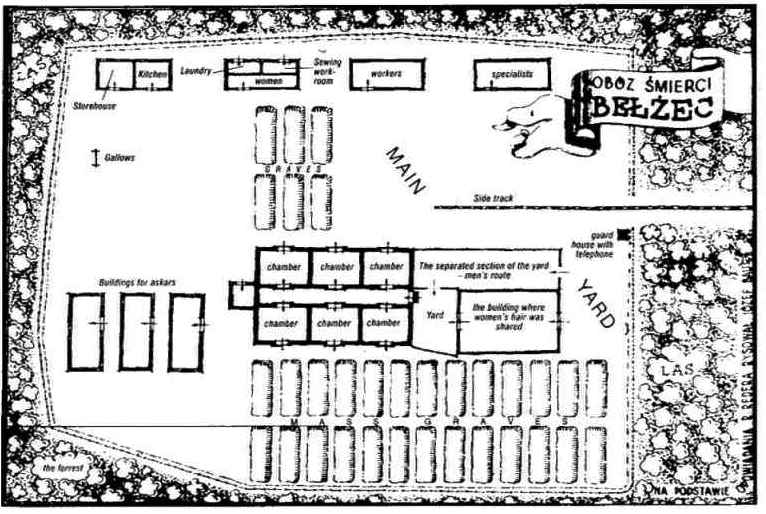
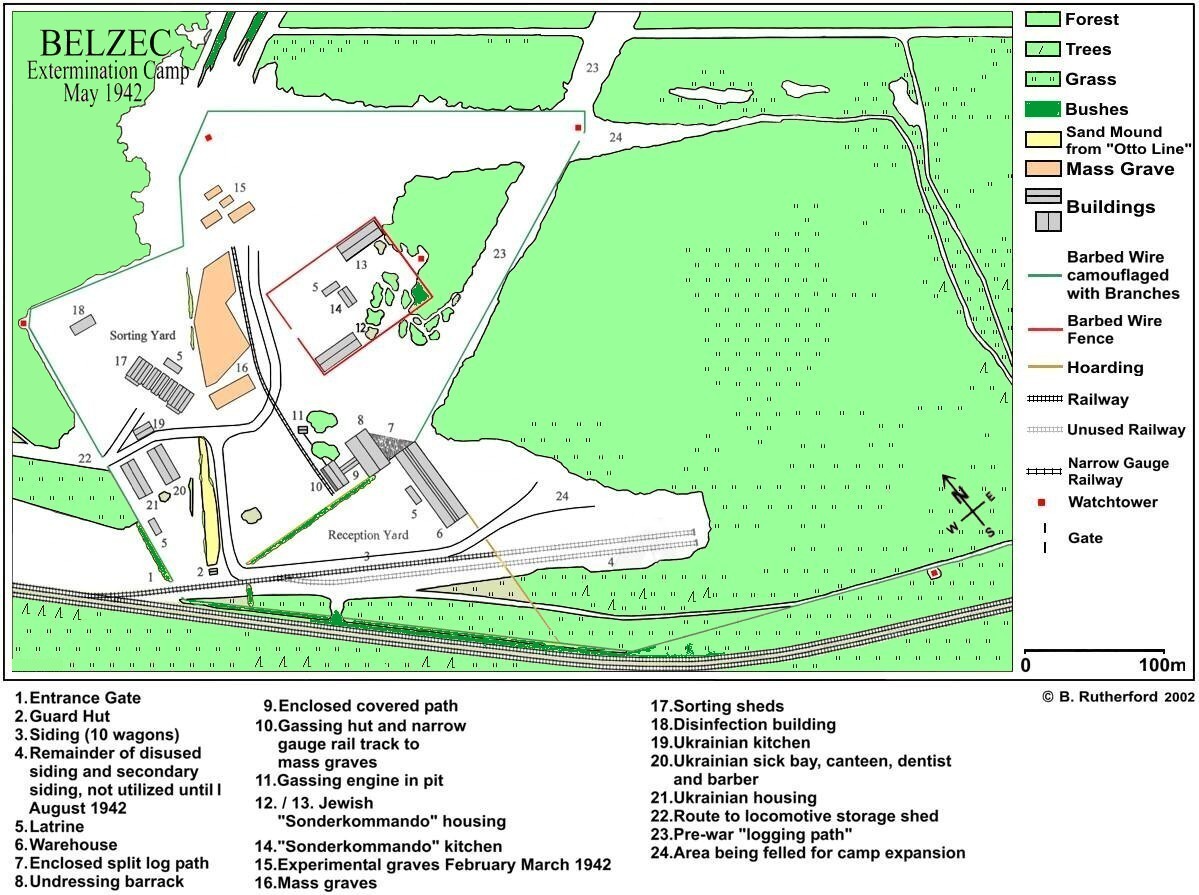
The entire camp occupied a relatively small, almost square area. Three sides measured 275m, the fourth on the southern side measured 265 meters. An adjoining timber yard was incorporated into the camp which was surrounded by a double fence of chicken wire and barbed wire.
The outer fence was camouflaged with tree branches. During the later reorganisation of the camp, the space between the two fences was filled with rolls of barbed wire. On the eastern side, another barrier was erected on a steep slope by fixing the tree trunks to wooden planks. During the second phase of the camp’s existence, a wooden fence was built along the side of the road at the foot of the steep eastern slope. A line of trees was planted between the western outer fence and the Lublin – Lvov railway line.
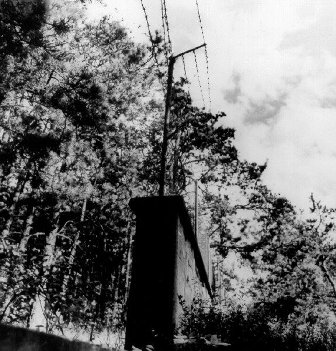
Four watchtowers were constructed: on the northeast and northwest sides, at the southwest corner and at the most westerly point of the camp. The north eastern tower was constructed on top of a concrete bunker at the highest point of the Belzec terrain, providing an excellent vantage point over the entire camp.
A fifth tower in the centre of the camp overlooked the entire length of “the sluice,” also known as “the Tube,” the camouflaged barbed wire pathway to the gas chambers. The watchtowers in the corners were manned by Ukrainian volksdeutsche from the Trawniki SS- Training Camp, armed with rifles. The central tower was equipped with a heavy machine gun and searchlight. In the camp’s second phase, further watchtowers were erected, including one positioned at the far end of the ramp.
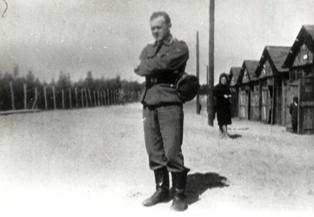
The guardhouse, permanently manned by SS men and Ukrainians, was located close to the entrance gate, on the west side of the camp. There was a compound for the Trawnikimanner to the east of the main gate. The Ukrainian area included three barracks, comprising two large huts and one smaller structure. The first large hut was used as housing for the Trawnikimanner. The second large hut housed the sickbay, a dentist and a barber. The third and smallest of the structures was used as the kitchen and canteen.
Belzec was divided into two sections, Camp 1 in the northern and western section, was the reception area and included the railway ramp, which could only accommodate 10 wagons. Some sources suggest that a disused siding was subsequently added to provide a second ramp for the latter phase of the exterminations.
Together the two ramps would have provided unloading facilities for many more wagons. However, according to other testimonies, every transport was divided into segments of 10 wagons. Initially, only the first segment of the transport was pushed into the camp.
The subsequent segments waited at the railway station until the preceding segment had been processed. A 200 meter long railway spur led through the gate on the north western side of the camp. A secondary inner gate was constructed at the point where the two sidings inside the camp diverged, close to the beginning of the second ramp.
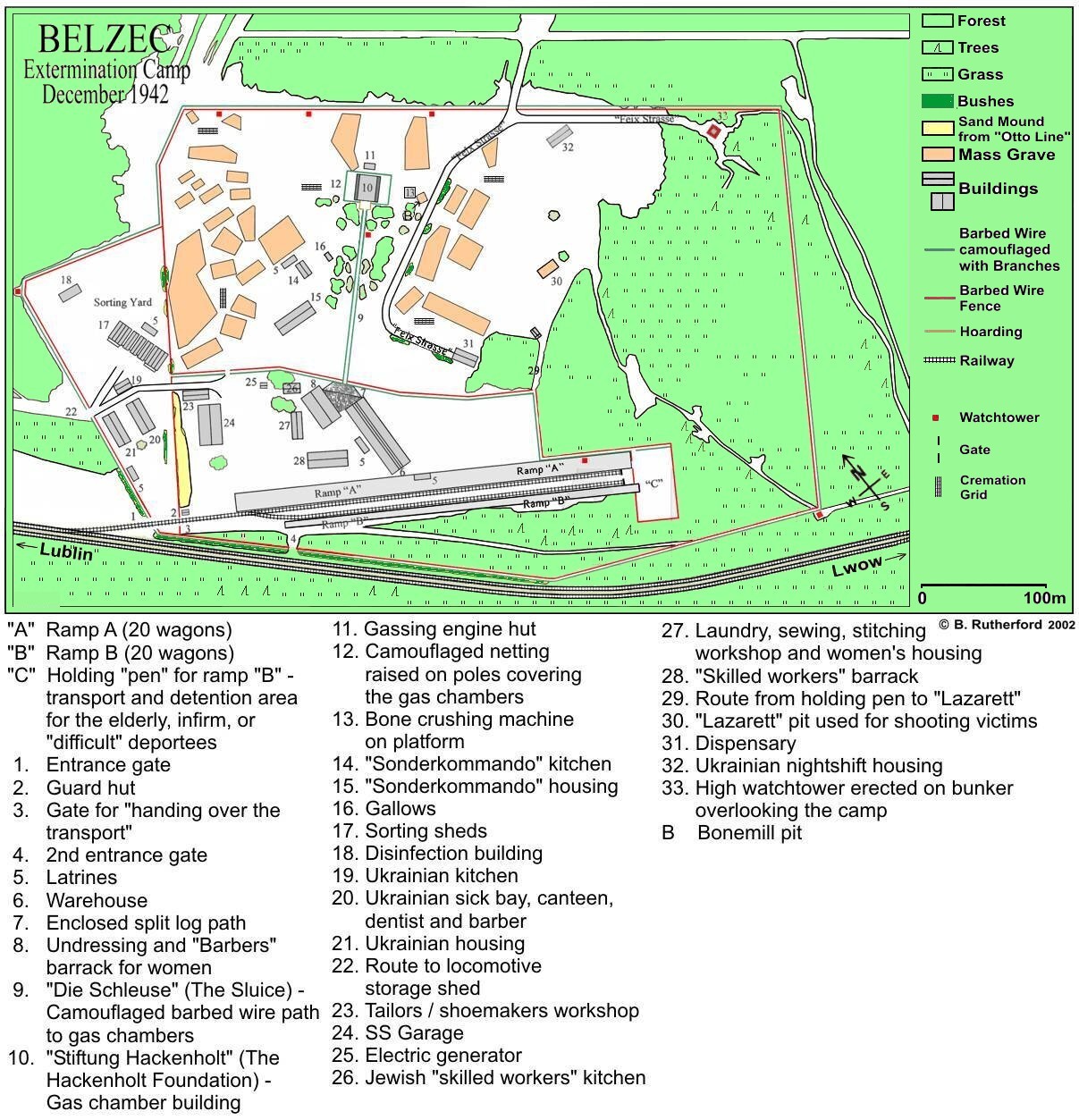
An enclosed yard was a holding pen at the far end of the second ramp was used for the “overflow” from the huge later transports. In the second killing phase there were two undressing barracks, one for women and children, and the other for men.
Camp II, the extermination area, included the gas chambers and large rectangular burial pits. The pits had an average size of 20 meters x 30 meters x 6 meters deep. These mass graves were located in the north eastern, eastern and southerly sections of the camp. Later two barracks consisting of living quarters and a kitchen, were erected in Camp II for the Jewish prisoners who worked there.
Camps I and II were separated by a camouflaged fence with two gates, one east of the SS garage, and the other close to the far end of the ramp. From this point a path led up the hill and through the forest to an execution pit.
A narrow passageway called “die Schleuse,” (the sluice) was constructed, 2 meters wide and 100 meters long, enclosed on both sides by camouflaged barbed wire fences. This passageway connected the undressing barracks in Camp I to the gas chambers in Camp II. A camouflage net was stretched over the roof of the building housing the gas chambers, in order to prevent aerial observation.
Stanislaw Kozak, a Pole, who participated in the building of the first gassing shed in Belzec, described its construction, as well as that of two other barracks and the initial construction phases. He testified on the 14 October 1945 in Belzec.
“There arrived in Belzec in October 1941, three SS men who demanded 20 workers from the Belzec community. The municipal office appointed 20 inhabitants of Belzec as workers – I was among them.
The Germans selected the area to the South East of the Railway station, where a siding ended. Alongside the siding ran the railway to Lemberg (Lvov). We began work on 1 November 1941 with the building of barracks at the end of the siding.
One barrack – which stood right next to the siding – was 50m long and 12.5m wide: it was a waiting room for the Jews. The second barrack – 25m long and 12.5m wide – was appointed for the Jews to bathe in. Near this barrack we built a third barrack which was 12m long and 8m wide.
This barrack was divided into 3 parts by wooden walls – each part being 4m wide and 8m long. The heights of each section was 2m, the inner walls of this barrack were so constructed that we nailed planks to them and filled the empty space between with sand.
The interior walls of this barrack were covered with pasteboard and the floor and walls – to a height of 1.10m – were covered with zinc sheeting. From the first barrack to the second barrack, about which I have already spoken, there led an alleyway of barbed wire fencing 3m wide by 3m high. The side of the fence nearest the siding was specially covered with pine and fir branches, so that nothing was visible from the siding.
From the second barrack a covered passage 2m wide, 2m high and about 10m long led to the third barrack. Through this passage one arrived at the corridor of the third barrack, which led via 3 doors into the 3 parts of the barrack. Each part of this barrack had a door on its north side – about 1.80m high and 1.10m wide. These doors, as well as those in the corridors, were sealed with rubber. All the doors in this barracks opened outwards.
The doors were very strong – constructed of planks 75mm thick and fastened from the outside by a wooden bar which fitted into 2 iron hooks. In each of the 3 parts of this barrack there was a water pipe fixed at a height of 10cms from the floor. The water pipe branched from each corner along the wall of each part of this barrack to the middle of the wall, and ended in an opening at a height of 1m from the floor. These water pipes were joined to a main pipe at a junction under the floor.
In each of the 3 parts of the above mentioned barrack stoves were placed weighing 250 kilos. One must surmise that the water pipes were later connected to these stoves. These stoves were 1.10m high, 55cm wide and 55cm long. Out of curiosity I glanced into the stove through an open door, I did not see any grate there. The interior of the stove was – so it seemed – lined with firebrick. I could not ascertain what the other stoves were like. The stove opening was oval, with a diameter of about 25cm, placed about 50cm above the floor.
Along the north side of this barrack a 1m high ramp made of planks was erected and along this ramp a narrow gauge railway track was laid which led right to the grave right in the north east corner, which had been dug by the ‘blacks’ (Ukrainian guards). This grave was excavated by 70 ‘Blacks.’ It was 6m deep, 20m wide and 50m long.
This was the first grave in which the Jews who were killed in the death camp were buried. The ‘Blacks’ took 6 weeks to dig the grave during the time we were building the barracks. This grave was later extended to the middle of the northern boundary.
The first of these barracks I mentioned lay 20m from the siding and 100m from the southern boundary. At that time, when we Poles were building these barracks, the ‘Blacks’ erected the fencing around the death camp, which consisted of wooden posts between which was strung barbed-wire.
After we had built the aforementioned 3 barracks, the Germans released us from our work on 22 December 1941. As far as I remember in January or February 1942, the Germans built 3 watchtowers around the camp. Further building work in the camp was carried out by Jews under German supervision.
The western and north eastern borders of the camp were planted with big fir trees and pines to hide the interior of the camp. The camp was divided from east to west in 3 parts. In the first part were the Jews employed in burying the corpses of other murdered Jews: in the second part, the sorting of clothing and other belongings of the Jews: and in the third part, those employed as workers in the camp.
I know the Germans baked 500 loaves of bread a day, sometimes more, for the Jews employed in the camp throughout the whole time it was in operation. At the moment of disbandment of the camp these Jews were taken away by train in the direction of Rejowiec.”
The stoves described were used to heat the shed’s rooms, thus allowing the bottled carbon monoxide gas and Zyklon B used in the early stages of the camp’s killing activities to work more efficiently in cold weather. It was in this manner that the camp operated in the early weeks, but not without some difficulties. The gas chambers were in fact, nothing more than a wooden barrack adapted and constructed to give the impression of a bathing facility.
To enhance this deception, the false showerheads were fitted by SS-man Erich Fuchs were installed and signs indicating a bath-house displayed. Despite all their efforts, the construction team were unable to make the building airtight.
According to SS-man Werner Dubois at each gassing operation in the wooden barrack, sand had to be piled up against the outer doors to rectify this problem. After the gassing, the sand had to be removed to allow access to the corpses. It became apparent that major alterations were necessary, particularly since the gas chambers were proving inadequate in size.
Towards the middle of March 1942 Belzec death camp was ready to receive the first transports of Jews for extermination. A number of local villagers testified about the first transport that arrived in Belzec.
Alojzy Bereszowski testified on the 5 November 1945 in Belzec:
“The first transport of Jews arrived towards evening sometime in March 1942. It consisted of about 15 wagons. This train was taken on to the siding. Later, during the evening of the same day, at about 9 o’clock, I heard from outside my house – which was in the station – the dreadful screaming of children, women and men, mingled with occasional rifle fire and machine-gun fire.
How many people arrived on this transport, I cannot specify, only that with my own eyes I calculated that in each wagon there were about 40 people. They were covered wagons.”
Viktor Skowronek testified on the 16 October 1945 in Belzec:
“The first transport – 15 March 1942, in the evening one heard howls and screams and sporadic shooting.”
On the evening of the 16 March 1942 the mass round-up of Jews in the Lublin ghetto commenced. The commanding officer for the first resettlement transport to Belzec was Hermann Worthoff.
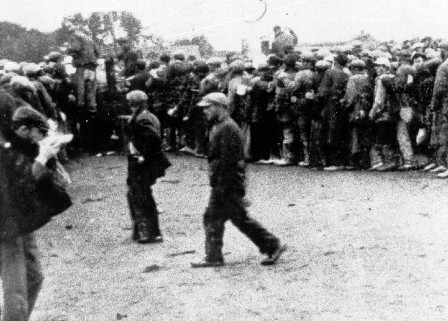
SS and Trawnikimanner seized 1,400 Jews from the ghetto, they were kept overnight in one of the large synagogues therein. The following morning they were marched to the Lublin slaughter yard near the railway station on the outskirts of the city, and about 3km from the ghetto, where they were loaded onto 19 wagons.
On the morning of the 17 March 1942 the transport left for Belzec, there were no survivors and by the end of March 1942, over 18,000 Jews from the Lublin ghetto were buried in the pits of Belzec. A further 8,000 Jews from Lublin were transported to the death camp in April 1942.
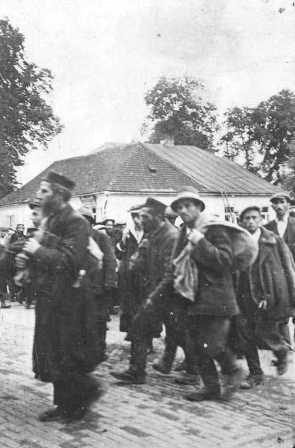
Transports to Belzec arrived from two directions: from the Lublin District and from eastern Galicia, with deportations from the Lvov ghetto in the period March to August 1942. Within a period of three weeks after the arrival of this transport, almost 30,000 Jews had been deported to Belzec from Galicia. Among them were 15,000 Jews from the city of Lvov deported during the so-called ‘March Action,’ 5,000 from Stanislawow, 5,000 from the Kolomea ghetto, and others from Drogobych and Rawa Ruska.
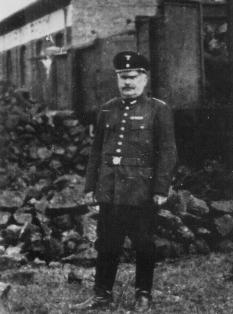
Transports arriving at Belzec station marshalling yard were held on spur lines in strict order of entry. In rotation, the wagons were uncoupled in blocks of 10 and shunted into the camp. Deportations arriving late in the evening were held overnight. The driver of the train shunting the wagons into the camp was Rudolf Gockel, the German stationmaster of Belzec, who was described by Polish Railway workers as being both cruel and sadistic.
The first contact the deported Jews had with the SS occurred after they were offloaded at the reception yard. Bemused and frightened, anyone showing anguish or defiance was removed by the guards to the execution pit in Camp II, where the Jews were shot in the back of the neck with a small calibre pistol.
The SS attempted to lull the deportees with calming words, Christian Wirth or Fritz Jirmann welcomed incoming transports through a loud-speaker, saying, “This is Belzec. Your stay is temporary – you will move onto work camps where your skills are needed. There is work for everyone. Even you housewives are needed to feed your families and to keep the houses clean. First I must have your co-operation so that we can get you on your way quickly.”
There was often a ripple of applause and shouts of “Thank you Mr Commander.” Then Wirth mentioned the crucial part of the deception, “We must have order and cleanliness. Before we feed you, you must all have a bath and have your clothes disinfected. It is necessary for women to have their hair cut.”
Wirth then instructed the duty NCO’s to continue the process. Men were requested to remove their shoes and tie them together with pieces of string handed out by Jewish workers. The men, now separated, were marched off in blocks of 750, five abreast. Supervised by the SS, at various points they handed over clothing, personal property and money, until they stood completely naked at the entrance to the ‘Tube,’ in a well – rehearsed operation, the Ukrainians, armed with whips and bayonets, prodded and forced the men into the chambers and closed the doors.
With a signal from the escorting Scharfuhrer the gassing engine was started and after approximately 20 minutes, an inspection through the peephole in the chamber door confirmed that all inside were no longer living, and the engine could be turned off.
Now the Jewish Sonderkommando led by Zugfuhrer Moniek was instructed by the SS to remove the bodies at the rear of the gas chamber. The doors were opened and the corpses were thrown out. Straps were fastened to the bodies in order to drag them to the trolleys in which they were to be ferried to the mass graves.
Each corpse was searched for valuables and any gold teeth removed before the bodies were lowered into the pits. Another commando cleaned the gas chambers, whilst others raked the sandy pathways to the building.
The women, having had their hair cut, together with the children, all awaiting their ‘bath’ feared the worst. By now they were in the ‘Sluice’ and their fate was sealed. If weeping and cursing took place, the Ukrainians stepped in to brutally chase the victims into the gas chambers.
Those found dead on arrival at the camp were piled to one side on the ramp, sick, elderly, infirm or ‘troublesome’ Jews were taken to the execution pit in Camp II and shot.
All of these ghastly scenes were accompanied by the camp orchestra, which played the favourite songs of the SS staff, ‘Drei Lillen’ and ‘Highlander do you have no regrets.’
Chaim Hirszman one of the few survivors of Belzec remembered:
“A transport of children up to three years of age arrived. The workers were told to dig a big hole into which the children were thrown and buried alive. I cannot forget how the earth rose, until the children suffocated.
Now is the time to describe the SS men who had created and operated this hell on earth:
Christian Wirth the first commandant of Belzec was the most dominant figure, he ruled Belzec with an iron hand. He was known by his fellow SS men as ‘Savage Christian.’ The Ukrainian guards nicknamed him ‘Stuka.’
Gottfried Schwarz acted as deputy commandant with Johann Niemann in charge of Camp II. Niemann was transferred to the death camp at Sobibor, where he met his death in the revolt in October 1943. Lorenz Hackenholt was in charge of the gassing engines, with two Ukrainians subordinated to him.
Josef Oberhauser and Gottfried Schwarz were involved in the construction of the camp, and welcomed Wirth when he arrived in Belzec shortly before Christmas 1941.In the early days under Wirth’s supervision, Hackenholt and Siegfried Graetschus converted a Post Office parcels van into a mobile gas chamber.
Schwarz and Niemann supervised the gas chambers during the first phase, and Werner Dubois or Karl Schluch in the second phase. Heinrich Unverhau oversaw the sorting depot in the old locomotive building from July 1942. In phase I, the same role had been performed by Rudolf Kamm. All of the SS men were given assignments in the camp administration and were in charge of specific activities, some having several duties, and from time to time these were changed.
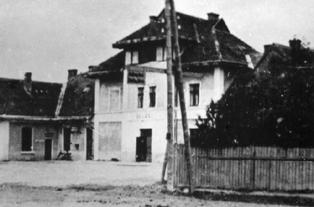
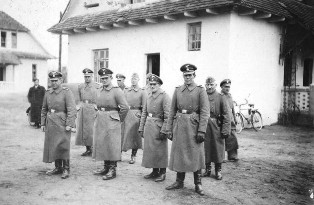
The SS garrison was located in two stone houses across from Belzec railway station on Tomaszowska Street. In the house nearer the camp, Wirth had his living quarters and his office, known as the Kommandantur.
The second house was used solely as housing for the SS, with a small 10-12m x 6m stable at the rear. The complex was surrounded by a wooden fence and barbed-wire, with the exception of the roadside area, which was manned around the clock by sentries.
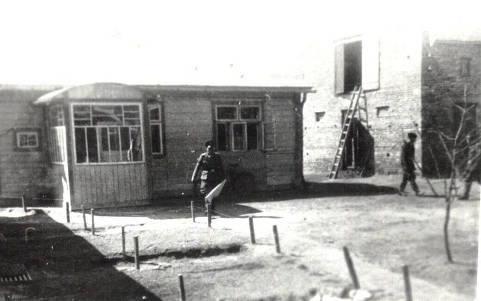
Adjacent to Wirth’s quarters there was a one- storey wooden cottage known as ‘The Pavilion,’ used for the camp’s general administration. It also served as accommodation for other members of the SS garrison such as Gottlieb Hering and Erwin Fichtner.
A barrack was constructed to the left of the Kommandantur and at right angles to the main road to accommodate the additional T4 personnel who arrived in July 1942.
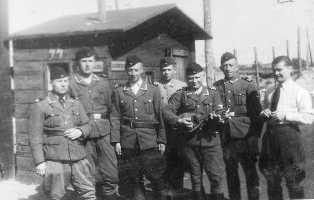
The Trawnikimanner were under the overall command of Gottfried Schwarz for their orders and for disciplinary purposes. In the initial phase there were about 60 -70 of these auxiliaries. This number was later increased to 120 men in two companies organised into four platoons, three on duty and one on standby.
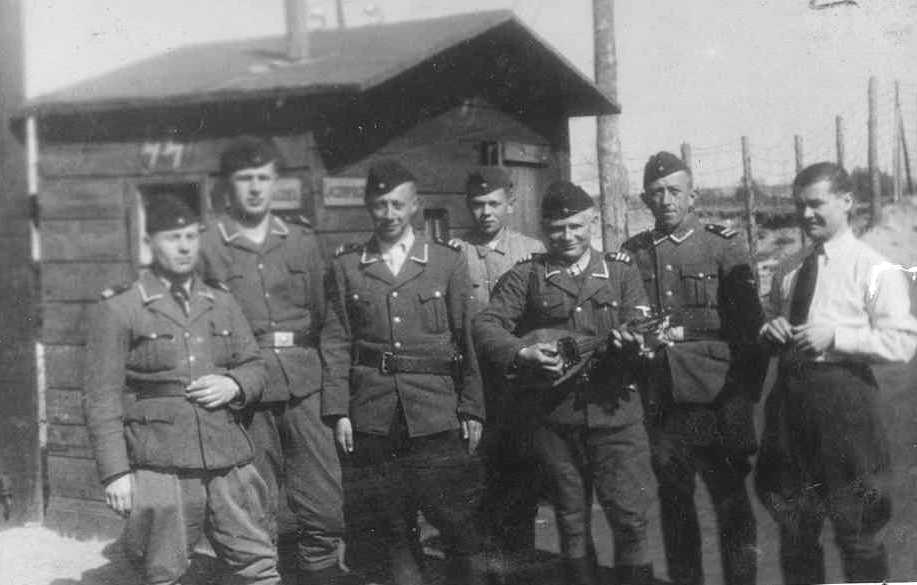
The training instructors for these men were Kurt Franz, Werner Dubois, Reinhold Feix, and Fritz Jirmann. The platoon and squad commanders were mainly Ukrainian Volksdeutsche and like the other members of this unit, had formerly been soldiers in the Soviet Army. They had titles like Hauptzugwachmann (Senior Platoon Leader) and Zugwachmann (Platoon Member).
Rudolf Reder recalled SS-Oberscharfuhrer Reinhold Feix and Heni Schmidt:
“It was said he came from Gablonz on the Neisse and was married and the father of two children. He spoke the way intelligent people speak. He talked quickly. If someone failed to understand him at once, he beat him and screamed to the high heavens like a madman.
Once when he ordered the kitchen painted, and a Jewish doctor of chemistry was doing it, standing right at the top of the ladder just under the ceiling. Feix ordered him to come down every few minutes and beat him across the face with his riding crop, so that the man’s face was swelled up and covered with blood.
That was how he did his job. Feix seemed abnormal, he played the violin, he ordered the orchestra to play the Polish melody “Highlander have you no regrets?” until they dropped. He commanded people to sing and dance and he toyed with them and tortured them. The beast went amok.”
“The young Volksdeutsch Heni Schmidt did not like spending a single day away from the camp. Nimble, quick on his feet, thin, with the face of a blackguard, always drunk, he raced around the camp from four in the morning until evening, inflicting pain, gazing meditatively on the suffering of the victims and revelling in the sight.
He was always there for goading the unfortunate victims along to the chambers, he listened closely to the women’s piercing air-splitting screams escaping the chambers. He was the “soul” of the camp, the most degenerate, monstrous, bloodthirsty.”
The Ukrainians manned the guard positions in the camp, at the entrance, in the watchtowers and on patrol. Some of them assisted in operating the gas chambers. Before the arrival of a transport, the Trawnikimanner took up guard positions around the railway ramp, the undressing barracks and along the ‘Tube.’
During the experimental killings and initial phase they were also given the task of removing the bodies from the gassing barrack and burying them. When transports arrived at the railway station in Belzec, the Trawnikimanner also guarded the train containing the deportees. From the railway station they also conveyed the bodies of people who were shot trying to escape from the transport.
The Trawnikimanner were mainly Ukrainians, until March 1943 most of them were from eastern Ukraine, but in these units there were also Russians, Tartars, Georgians and ethnic Bulgarians, most did not speak German.
In the first phase the Jewish work brigade consisted of 100-150 men. In the second phase, a total of 500 prisoners in Camps I and Camps II were utilised. It was the task of these work brigades to remove the corpses from the gas chambers and bury them.
They also collected and sorted the clothing, suitcases and other goods left behind by the victims, which were sorted in the locomotive sheds located outside the camp. During the first phase, Jewish workers were executed after a few days, although after July 1942, Wirth organised permanent work brigades in which each member knew his part.
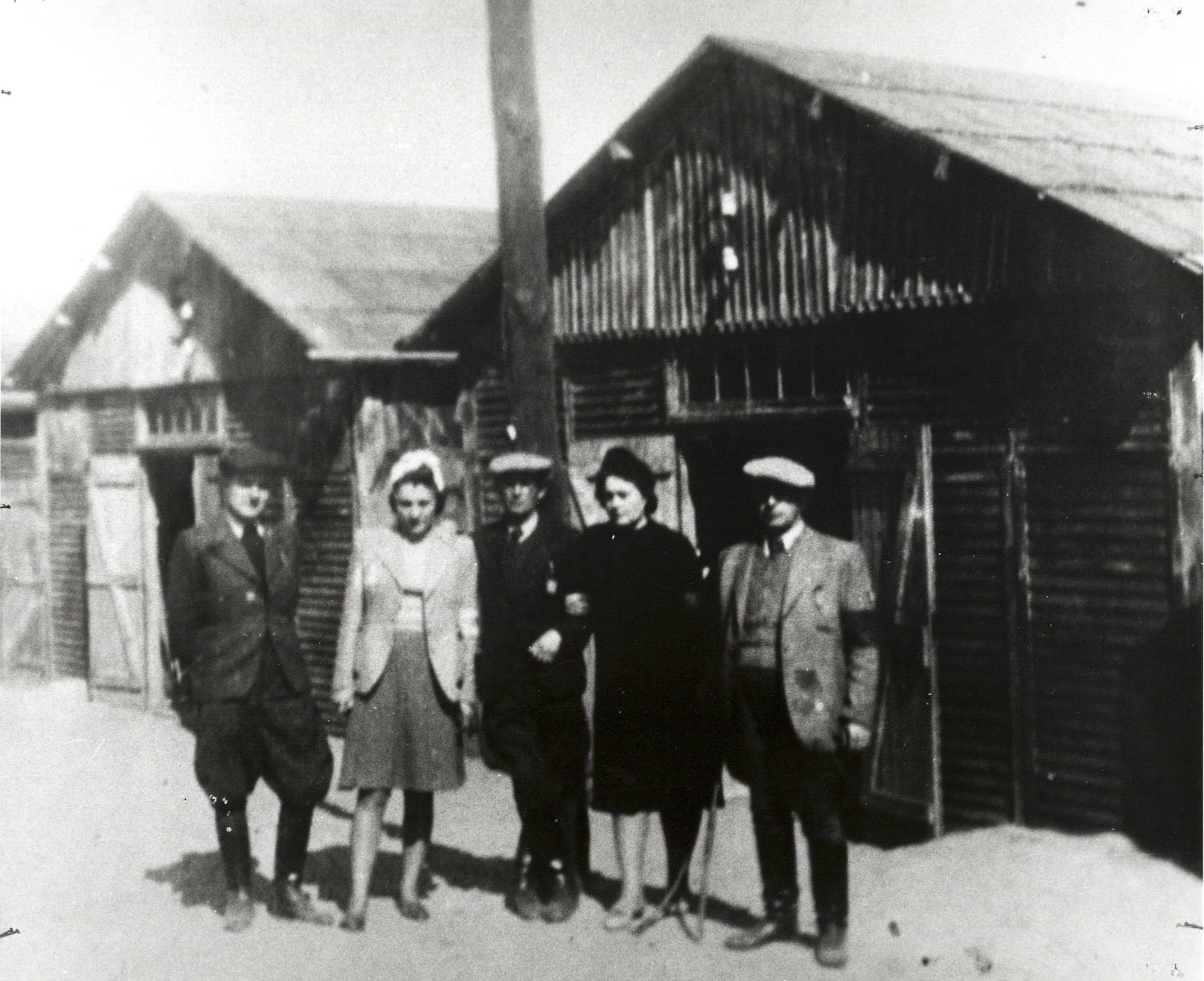
This was initiated in order to ensure that the entire process could function without disruption. There was also a group of women among the prisoners of the Sonderkommando. Most of these women spoke fluent German, some worked in the Commandant’s quarters or those of the SS –men, others in the camp laundry or in the camp kitchen, included within this group were Czech and Polish Jewesses.
Franz Suchomel who served in Treblinka was interviewed by Claude Lanzmann in the film Shoah, he described Belzec as the ‘laboratory’ and this indeed would seem to have been the case:
It was at Belzec that the system of mass murder was conceived and refined. Wirth carried out experiments to determine the most efficient method of handling the transports of Jews, from the time of their arrival until the time of their murder and burial.
He developed basic concepts for the process of extermination and for the camp structure. The aim was to give the victims the impression that they had arrived at a transit camp from where they would be sent onward to a labour camp. The deportees were to believe this until they were enclosed within the gas chambers.
In addition, everything was to be carried out with the utmost speed. The victims had to run, having no time to look around, to reflect upon or to comprehend what was happening to them. According to Wirth’s annihilation scheme, the Jews themselves would carry out all physical work involved in the liquidation of each transport.
The SS men were allocated their respective duties prior to the transports entering the camp, from reception to extermination and burial. These duties included the shooting of those unable to be taken to the gas chambers, supervision of the unloading on the ramp, others were present at the undressing barracks. Another group was at the ‘Tube’ and at the gas chambers and burial pits.
All of them carried horsewhips and all of them were very cruel toward their victims. Possessions were sorted in the sorting depot, which was located outside the camp, in the locomotive area, adjacent to Belzec station, after being sorted the possessions were sent to the Aktion Reinhard warehouses in Lublin, at the Alter Flugplatz (The Old Airfield).
In April 1942 Franz Stangl visited Belzec for a briefing by Wirth concerning Stangl’s duties as Commandant of Sobibor death camp, prior to receiving transports. Stangl recalled in an interview with Gitta Sereny in 1971:
“I can’t describe to you what it was like. I went there by car. As one arrived one first reached Belzec railway station on the left side of the road. The camp was on the same side, but up a hill.
The Kommandantur was 200 meters away, on the other side of the road. It was a one-storey building. The smell… Oh God, the smell. It was everywhere. Wirth wasn’t in his office I remember they took me to him.
He was standing on a hill, next to the pits…. the pits… full, they were full. I can’t tell you; not hundreds, thousands, thousands of corpses…. oh God. That’s where Wirth told me – he said that was what Sobibor was for, and that he was putting me officially in charge.”
During mid-April 1942 Wirth temporarily closed the camp and left for Berlin, taking with him his deputy Schwarz, and his gassing expert Lorenz Hackenholt. Before leaving Belzec, the entire Jewish workforce was shot. Wirth visited Berlin in order to receive orders for the expansion of the camp and the construction of larger gas chambers for intended future transports. When he returned to Belzec the re-construction of the death camp took on a new sense of urgency.
In the last week of May 1942 three small transports arrived in Belzec; on the 22 May 1,000 Jews from Tyszowce, on the 23 May 1,000 Jews from Komarow and on the 27 May 500 Jews from Laszczow.
In June 1942 transports from the Krakow district arrived at the camp for the first time. Three trains with 5,000 Jews from the Krakow ghetto arrived between the 3 and 6 June 1942. From the 11 to the 19 June 1942 an additional 1,600 Jews were transported from the Krakow District.
Also in June 1942 the first big transports from Tarnow arrived in Belzec, carrying to their death about 10,000 Jews. Because of the increasing number of transports, the three existing wooden gas chambers were considered totally inadequate to deal with the number of potential victims. New chambers with larger killing capacity were necessary.
The old wooden gassing barrack was dismantled, and in a more central location a larger, more solid structure was erected. The new gas chambers were located behind a copse of trees. Due to Belzec’s high elevation, this copse shielded the gas chamber from observers outside the camp area.
The ‘Sluice’ ran through the copse, a 2 meters wide, open air corridor enclosed within 3 meters high camouflaged fences, it led from the undressing barracks to the door of the new gassing building. The new building was 24 meters long and 10 meters wide, it had six gas chambers, each of them 4m x 8m. Towards the middle of July 1942 the new chambers were operational, and Rudolf Reder, who was deported from Lvov in August 1942, and who later escaped from the death camp, recalled the gas chambers:
“The building containing the chambers was low, long and wide, gray concrete, with a flat roof covered in tar paper, and above that another roof of netting covered with foliage. From the yard, three steps, a meter wide and without railings, led up to the building. A big vase full of different –coloured flowers stood in front of the building. On the wall it was clearly and legibly written: “Bade und Inhalationsraume.”
The stairs led to a dark corridor, a meter and a half wide but very long. It was completely empty, four concrete walls. The doors to the chambers opened to the left and the right. The doors, made of wood, a meter wide, were slid open with wooden handles.
The chambers were completely dark, with no windows, and completely empty. A round opening the size of an electric socket could be seen in each chamber. The walls and the floor of the chambers were concrete. The corridor and chambers were lower than a normal, not more than two meters high.
On the far wall of each chamber there were also sliding doors, two meters wide. After asphyxiation the corpses of the people were thrown out through them. Outside the building was a small shed, perhaps two meters square, where the ‘machine’ was, a gasoline- driven motor. The chambers were a meter and a half above the ground, and at the same level as the chambers was a ramp at the doors, from which the bodies were thrown to the ground.”
At around the time the Lvov deportations were in full swing, on the 16 August 1942 Kurt Gerstein and Wilhelm Pfanenstiel visited Belzec, they were both from the SS Technical Disinfecting Services, and they were sent to Belzec to test the efficiency of Zyklon B for delousing lice infected clothing, and to see whether Zyklon B could be used to improve the killing capacities. Kurt Gerstein, wrote a very detailed report of his visit to Belzec, Gerstein allegedly committed suicide in Fresnes Prison, just outside Paris, and his report is covered on another page.
Christian Wirth was appointed to the post of Inspector of the Aktion Reinhard death camps at the end of August 1942, and his replacement at Belzec was Gotlieb Hering, who was an old colleague of Wirth, and had served with him in the Stuttgart Criminal Police (Kripo)
The peak period of “resettlement” was from July to October 1942. Three to four transports per day arrived at Belzec death camp, where conditions now were gruesome. In the month of August 1942, at the height of a very hot summer, about 130,000 Jews mainly from Galicia and Krakow districts were murdered in Belzec. During the next month about 90,000 Jews were deported to the death camp.
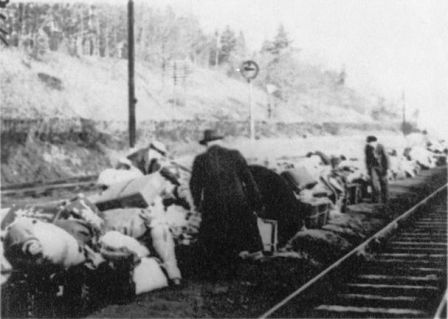
Piles of flea-bitten, evil smelling, putrefying corpses were simply dumped on the ramps, awaiting removal by the Jewish work brigade. The next batch of deportees brought considerable numbers of yet more dead people, merely added to the mass of corpses.
Robert Juhrs recalled how he was ordered by Hering to take those too sick or too weak to be gassed, “for a pill.” This was a euphemism in the camp for them to be killed with a shot to the back of the neck. Despite the Germans attempts to maintain secrecy, two reports from the Polish underground organisation concerning Belzec, indicate that the Allies were aware about the camp’s murderous activities.
One report describes an act of resistance in the camp, when members of the Jewish Sonderkommando attacked the Ukrainian guards in June 1942, and other reports regarding Belzec were published in the Polish Fortnightly Review on the 1 December 1942.
The final resettlement transports to Belzec arrived on the 11 December 1942 and this accelerated the work of corpse burning, which had begun in November 1942. The exhumation and burning of the corpses was carried out by Jewish workers rather than by Sonderkommando 1005, which had been established by Himmler to eradicate all remains of the mass slaughter in the East.
Hering delegated Heinrich Gley and Friedrich Tauscher to begin this work, assisted by Hackenholt, who had at his disposal a mechanical digging machine for excavating the corpses. Jewish workers of the so called “Death Brigade” assembled pyres, burned the bodies and re-buried the remains in the mass graves.
The grates (pyres) were built by arranging standard gauge railway line sections on top of large concrete plinths. Narrow gauge line sections were then placed crossways on top of the structure to form a close-meshed solid grate. Three to four pyres – although Belzec villagers state there were five – were constructed from early November 1942 onwards and were in continual use until March 1943.
The corpses were loaded onto the grates and soaked in heavy oil, then set alight, and for months the whole area lay under a heavy pall of black oily smoke. The local inhabitants scraped human fat from their windows. Attempts to destroy all the evidence were assisted by the use of a bone – crushing machine brought from the Janowska Labour Camp in Lvov, which was operated by a man called Szpilke.
One incident worthy of note took place in March 1943, Heinrich Gley a member of the SS camp staff killed a fellow SS man. At a bunker in a copse opposite the Kommandantur, two Ukrainian guards had been imprisoned for stealing valuables.
In the darkness and confusion, Gley shot and killed Jirmann, mistaking him for one of the Ukrainians. Wirth, his adjutant Oberhauser along with camp commandant Hering conducted a thorough investigation. Jirmann was buried in the German Military cemetery at Tomaszow Lubelski, but was later moved to the German Military Cemetery at Przemysl.
The decommissioning of Belzec commenced in the spring of 1943, the elaborate system of fences and barriers, the barracks and gas chambers were all dismantled and items of use were taken to Majdanek (KZ Lublin).
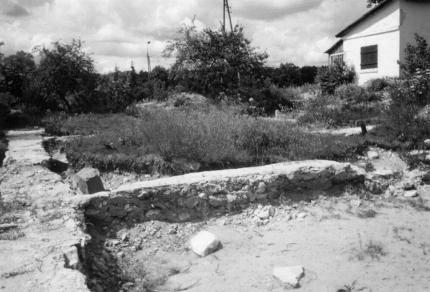
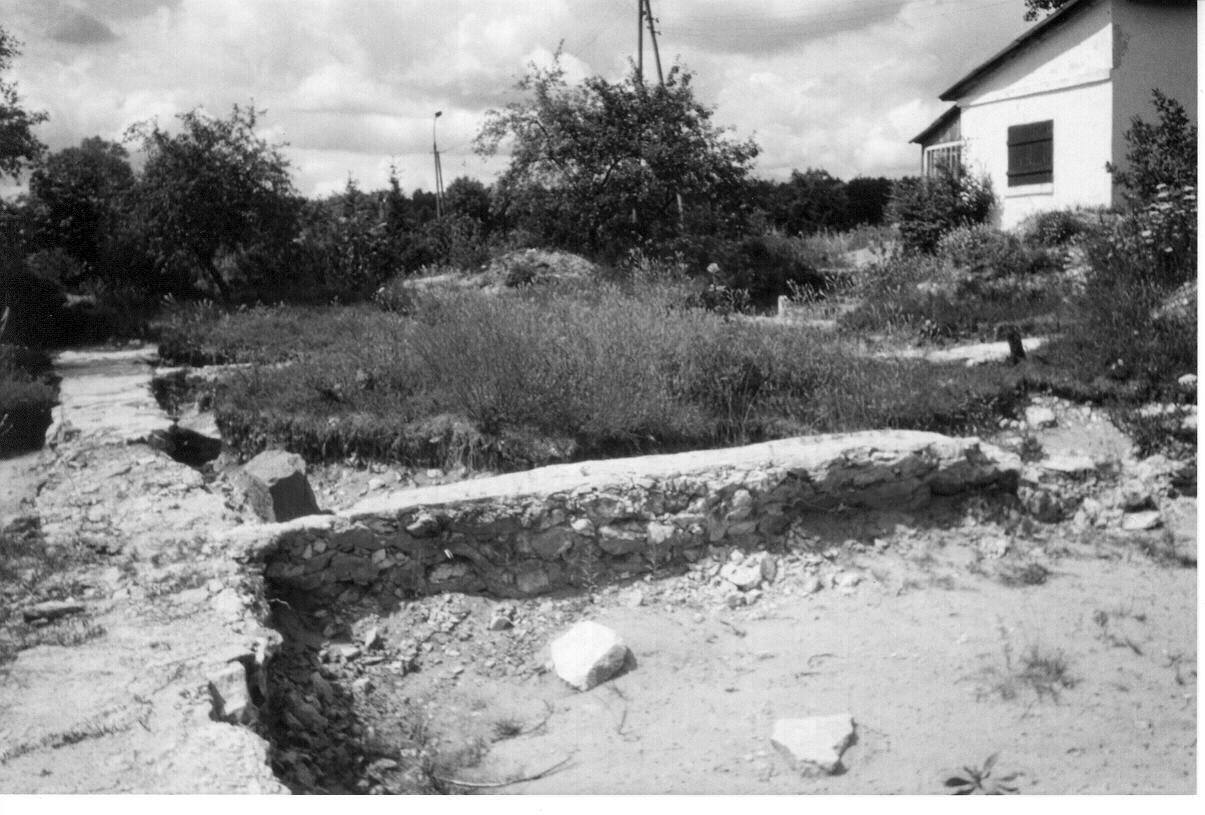
The entire area was then landscaped with firs and wild lupines. The Kommandantur and the neighbouring house, and outbuilding, which had been the property of the Polish Railway before the war, were not demolished. The camp leadership decided to transport the remaining 300 Jewish members of the Sonderkommando to the Sobibor death camp. Hering told the Jewish Kapo’s that they were being taken to Lublin.
Dining tables and bread for three days, together with canned food and vodka were placed in the wagons. Leon Feldhendler, a Jewish prisoner, who led the prisoner revolt at Sobibor, recorded:
“On 30 June 1943 a transport of the last Jews from Belzec arrived under the supervision of SS-Unterscharfuhrer Paul Groth, to be liquidated. Whilst being unloaded, the Jewish prisoners begun to run in all directions, they were shot at random throughout the camp.”
With the exhumations and burning activities virtually completed, Hering left the camp, placing Tauscher in charge of the final preparations, and when that was completed the Belzec SS garrison was dispersed to other camps.
The local population descended on the former camp site, looking for gold and other valuables. Whilst doing this they unearthed parts of decomposing bodies. The scavenging of the former death camp site was witnessed by Werner Dubois, who had been sent back to Belzec from Sobibor by Wirth, a few days after the SS had left. Dubois reported his findings to Wirth, who discussed the matter with Globocnik. They decided to plant trees and construct a farm for permanent occupation by a Ukrainian family in order to guard the area from scavengers.
In the summer of 1943, two small contingents of SS men and Ukrainians arrived to carry out this work. One contingent came from Treblinka, the other from Sobibor. The Treblinka group was led by Karl Schiffner, the Sobibor contingent by Heinrich Unverhau.
A large Jewish house from the other end of Belzec village was demolished and then re-constructed as a farm for the Ukrainian custodian to live in. In the summer of 1944 the Belzec region was occupied by the Red Army and shortly after the liberation the local villagers demolished the farm.
About fifty Jews escaped from Belzec death camp, only a handful survived the war, only Rudolf Reder, Chaim Hirszman, and Rabbi Israel Schapiro from Lvov were able to provide eyewitness testimony about the camp.
The most recent research, a decoded message from Hofle, intercepted by the British at Bletchley Park indicates a total of 434,508 victims for Belzec, which is a considerable reduction when compared with earlier estimates, but like the other Aktion Reinhard camps of Sobibor and Treblinka, it is unlikely the precise number will ever be known.
Belzec, Sobibor Treblinka by Yitzhak Arad published by Indiana University Press, Bloomington and Indianapolis 1987 The Holocaust – by Martin Gilbert published by William Collins London 1986 Archive of Belzec Memorial Museum The Encyclopaedia of the Holocaust Belzec Prototype for the Final Solution by Robin O’Neil Belzec by Rudolf Reder published by Fundacja Judaica Krakow 1999 Into That Darkness by Gitta Sereny, published by Pimlico 1974 Belzec Death Camp by Michael Tregenza – Wiener Library Bulletin 1977 Belzec – Robert Kuwalek Holocaust Historical Society Regional Museum of Tomaszow Lubelski Private Archives
Copyright Chris Webb, Victor Smart & Carmelo Lisciotto H.E.A.R.T 2009 |