Holocaust Education & Archive Research Team |
Ghettos
Prague Introduction to the Ghettos of the Holocaust
Jewish Ghettos The Judenrat Judenrat Leaders Prominent Jews
| ||
Nazi Restrictions on the Jews of Prague & The Role of the Jewish Community Council [Guest publication by Holocaust Survivor Frank "Brichta" Bright]
The rules, orders, prohibitions and restrictions with which the Jewish population had to comply are shown in the sequence shown on the original pages, i.e. they are not always in chronological order.
The following represents only a small fraction of the total number of prohibitions, restrictions, confiscations and humiliations Jews had to endure before their deportation to the Final Solution.
Dates are shown in the order: day, month, year. Words are shown in bold lettering where they are thus shown in the original German text.
The Jewish Community in Prague
Jews in the Protectorate of Bohemia and Moravia
Development of the Jewish population in the Protectorate of Bohemia and Moravia is marked by a steady reduction in numbers between 15 March 1939 (the start of the occupation) and 15 June 1942 (the final date to which the statistics refer).
By the end of July 1943 all Jews, save those in mixed marriages, had been transported to the East or to the ghetto of Theresienstadt and to the East from there.
Jewish % as on Population 15.03.39
15.03.1939 118,310 100.00 31.07.1939 108,898 92.94 30.09.1939 103.878 87.80 31.12.1939 97,961 83.70 31.03.1940 94,741 80.08 30.06.1940 91,995 77.76 30.09.1940 90,681 76.65 31.12.1940 90,041 76.11 31.03.1941 89,338 75.51 30.06.1941 88,686 75.37 30.09.1941 88,105 74.96 30.12.1941 74,190 62.71 31.03.1942 61,320 51.83 15.06.1942 48,273 40.80
It can thus be seen that between 15.03.1939 and 15.06.1942 the number of Jews within the territory of the Protectorate of Bohemia and Moravia was reduced by 59.20% from 118,310 persons to 48,273 persons.
The reduction in numbers during the period 15.03.1939 and 15.06.1942 is made up as follows:
1. Emigration 25,860 persons 2. Migration 7,000 persons 3. Sent to ghetto 31,153 persons 4. By natural causes 6,024 persons
The first transport from Prague to Lodž left on 16.10.1941. After five transports to Lodž there was a transport from Brno to Minsk and from then onwards all transports went to the ghetto of Theresienstadt first, starting on 30.06.1942 except for the reprisal transport of 1,000 Jews which went directly to Ujazdów after Reichsprotektor Heydrich's assassination.
Total reduction during the period from 15.03.1939 to 15.06.1942: 70,037 persons
Emigration
Between 15.03.39 and 15.06.42 a total of 25,860 persons emigrated.
1939 1940 1941 1942 Total % of from 15.03 to 31.05 118,310 Destination (Continent)
North America 1,263 156 63 1,482 1.25 Central America 512 81 78 671 0.57 South America 2,652 1,988 33 4,673 3.95 Australia 176 176 0.15 Africa 132 33 2 167 0.14 Asia without Palestine 1,273 2,715 54 4,042 3.42 Palestine 2,068 49 2,117 1.79 Europe 10,490 1,154 305 133 12,532 10.59
Total 19,016 6,171 535 133 25,860 21.86
The Prague Jewish community
The Trust Establishment of the Treuhandstelle/Trust
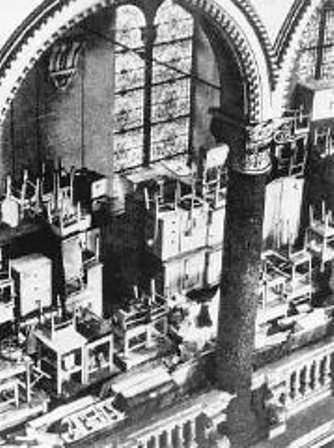
On 13 Oct. 1941 the Jewish community in Prague was ordered to establish a trust with the object of seizing furniture and chattels from those deported or sent to ghettoes and to manage them as trustees.
The Holding in Trust of Keys
Every person in a transport is allocated a number. On entering the collecting point the deportee hands over the key of his locked-up home to the branch office of the Jewish community. The handed-over keys have (attached to them) the same number which the deportee is wearing.
The collected keys are then handed to the trust and are put on key rings and, in the sequence of transports, are kept safe.
Statistics
Of a total of 5,692 keys 3,597 had been collected from main tenants and 2,095 from sub-tenants. By the 10.06.1942 a total of 4,042 keys remained in the trust's warehouse of which 2,431 had come from main tenants and 1,611 from sub-tenants.
Detailed Method of Stock-taking of Dwellings Left By Those Deported.
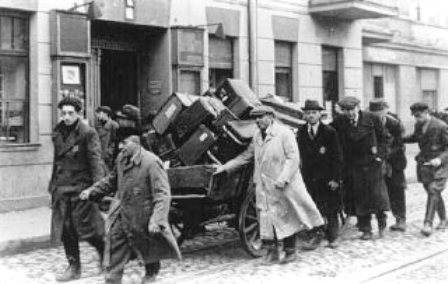
Valuation of dwellings left by those deported. Removal of furniture and chattels. The establishment and management of store rooms. The trust supports 23 specialist storerooms which are managed by Jewish store-keepers.
Control Department.
For the purpose of the inspection of all work processes the trust has established specialist control departments which have to fulfil the following tasks:
a) control of external duties, b) control of personnel, c) control of stores and store-books.
Checking of Property Declarations
Every deportee is obliged to complete a property declaration. One copy of this property declaration is handed over to the trust. At section VII of the property declaration the emigrant states whether furniture or chattels were kept by him for safe-keeping for third parties. The administrators of Jewish property will be called on by the trust to seize such objects.
The Registry
The range of work of the registry includes the following sections:
1. The establishment of an index of street names for all external work processes, 2. Checking of the protocol of the representatives and groups of packers, recording of their work in a diary and of statistical data, 3. Making arrangements for the valuation of the contents of the dwelling, 4. Making arrangements for the carting away of the contents of the dwelling, 5. Handing over valuation lists and the corresponding keys to the central office for Jewish emigration, 6. Management of an archive of the original valuation lists of stock, packing and transport records 7. Management of a general register of names, 8. Management of a special register to deal with matters in hand 9. Return of reports on activities, statistical representation for the central office of Jewish emigration, Prague, for the head of the trust and its external secretariat. 10. Provision of information by the registry on all internal and external branches of the establishment.
Central Register of Folders
A typical transport results in about 500 folders so that the present 19 transports from Prague represent approximately 10,000 folders. Evidence of abandoned dwellings.
Following a ruling by the central office for Jewish emigration, Prague, the trust has, together with the housing department, opened a register in the shape of a book (book H), which contains all necessary data and papers required to deal with every case:
the name of the main tenant who left, the letter of the transport and registration number, the precise address, the name of the owner of the house, the number of rooms, the type of heating, description whether block or house, classification of furnishings.
The central office for Jewish emigration reports weekly to the Trust the programme for the emptying of dwellings for the following week.
This is done by the transfer of a register containing merely the number of the dwelling as shown in Book "H" as well as the store where the contents of the dwellings are to be taken.
The implementation of the clearance is by district and street so that all work processes, such as taking, valuation, packing and dispatch of the contents of the dwelling, receive a rational and economic treatment.
The Prague Jewish Community
Financial Management
Before 15.03.1939 (the day Germany occupied the Bohemian and Moravian part of the Czechoslovak Republic, Slovakia declared itself an independent Fascist state and Hungary seized the rest) the total annual expenditure of the Jewish community in Prague was approximately:
The revenue from taxation was until now very favourable. From 15.03.1939 till to-day (15.06.1942) revenue from taxation amounted to:
The transferred income from the forced closure of 274 Jewish Societies, Jewish Foundations and their funds totalling:
The yields from the (compulsory) collection "Victims-Rebuilding-Life" amounted to, thanks to the willingness of the Jewish population of the Protectorate of Bohemia and Moravia to make sacrifices:
Finally, the Jewish community offices in Prague benefited from the transfer of the property of the former Jewish provincial community offices and from the closure of the Zionist central association-Palestine office by the amount of:
So that the total income from 15.03.1939 to to-day (15.06.1942) amounts to:
(Note: By 15.06.1942 the Jewish population of Bohemia and Moravia had been reduced from 118,310 to 48,273 persons or by 59.20% while at the same time this reduced number had been taxed 177.6 times more , K 2,500,000,-- pre-occupation, 443,999.000,-- during occupation. On top of that the property, the contents of flats and houses of those deported and killed was also taken.
The book contains only categories and numbers of such items, not their financial value. What is called "income by the Jewish community offices", later called "Ältestenrat" or council of elders, was in reality pocketed by the German occupation authority.)
(By July 1943 all Jews, including the employees of the council of elders, except those in mixed marriages, had been deported and the work of the Jewish community offices or council of elders came to an end).
The Prague Jewish Community
Special/Additional operations
Apart from the run-of-the-mill work of the departments the Jewish community offices had to carry out a number of additional operations in accordance with the demands of the superior authority. Of the larger operations the following are described:
Middle of September 1939: Establishment of Jews with Polish nationality. By searching houses and flats in Prague those Jews who formerly had held Polish nationality were found.
Middle of September 1939: Curfew. Jews were forbidden to be out of doors after 20:00 hours. This prohibition was broadcast by word of mouth by the employees of the Jewish community offices.
22 September 1939: Counting of Jews. This was the first recording of all Jews in the Protectorate of Bohemia and Moravia. The deadline was short, just three days. This operation provided the impetus for a central card index.
22 September 1939: Handing over Radio Receivers. The Jews of Greater Prague had to hand over their radio receivers. The receivers, about 12,000 of them, were delivered during the deadline of two days and had to be stored by the Jewish community offices. The operation was particularly difficult because it coincided with the counting of Jews.
27 September 1939: Removal of Polish Nationals. By Transportation.
12 January 1940: Social Assistance to Jews of Hungarian Nationality. An inventory of all Jews with Hungarian nationality who receive social assistance from the Jewish community offices, with details of the assistance received.
15 April 1940: Inventory of Emigrants to Denmark, Norway and Sweden. An inventory of all persons who had made an application to emigrate to Denmark, Norway or Sweden was prepared.
1 to 2 September 1940: Completion of Transport of Special Groups. All departments of the Jewish community offices were employed, or were on standby, to ensure the smooth completion of the transport of special groups.
10 to 13 September 1940: Registration of Jewish Dwellings in Prague. All Jewish dwellings, based on a street map, were prepared, the findings processed and bibliographed as well as statistics drawn up.
1 to 4 October 1940: Registration of Jewish dwellings in Brűnn / Brno. Similarly to the action in Prague all Jewish dwellings in Brűnn were recorded.
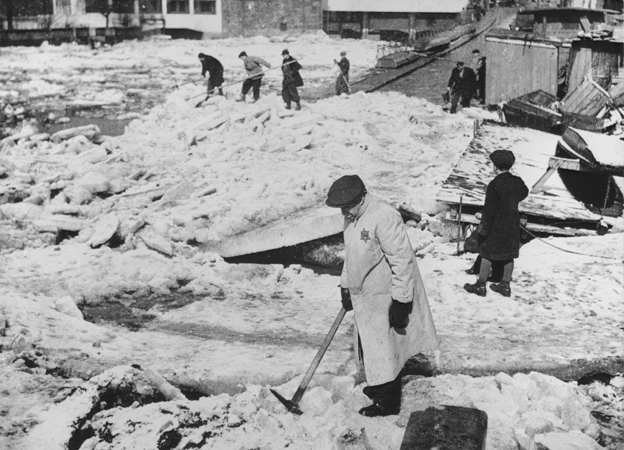
January 1941: Snow clearance. An average of 500 men had to report daily to the airport at Rusin to clear the paths.
11 August 1941: Recording of medical instruments. Questionnaires were issued to all Jewish doctors to establish what type of medical instruments and equipment they possess.
17 September1941: Distinguishing labelling of Jews. Jewish stars were distributed to all Jews in Prague and in the provinces within 3 days.
October 1941: Register of Jews who had been severely injured and those decorated during the Great War. It had to be established by means of a questionnaire how many Jews were severely war-wounded and how many had received war decorations.
20 October 1941: Prohibition to dispose of own property. By means of an announcement, which every head of a Jewish family had to sign, Jews were henceforth prohibited from disposing of their own property. These forms were checked, were sent by courier to the provincial Jewish community offices and returned when signed.
25 October 1041: Handing over of typewriters and bicycles. Jews had to deliver up to the Jewish community offices all typewriters and bicycles in their possession.
20 December 1941: Handing over of Skiing gear, Gramophones and of Gramophone Records. Jews had to deliver up to the Jewish community offices their skiing gear as well as their gramophones and gramophone records.
20 December 1941: Confiscation of Sewing Machines. All sewing machines in Jewish hands were confiscated. They had to be made available to be collected.
26 December 1941: Delivery up of musical instruments, cameras incl. attachments and technical measuring equipment. All cameras, portable musical instruments and technical measuring equipment in possession of Jews had to be delivered up to the Jewish community offices. Non-portable instruments were collected.
10 January 1942: Collections of Articles of Fur and of Woollens. Jews had to hand in all furs as well as woollens in their possession except where they had an absolute need of them.
10 March 1942: Handing in of Furs by Slovak nationals. Articles of fur and of woollens owned by Jews of Slovak nationality had also to be delivered up.
15 March 1942: Evacuation of Beneschau. 137 Jews were removed from Beneschau and resettled within a week in Tábor with Jewish families.
7 May 1942: Mixed Marriages. Exact statistics were submitted of all Jews who live in mixed marriages. These were gathered and processed by means of a questionnaire.
Reporting of domestic animals
All Jews had to report domestic animals in their possession. This was done by a questionnaire operation.
Transports
The carrying out of transportation required the deployment of all departments of the Jewish community offices. On every such occasion about 400 employees have to be assembled to keep to the time-schedule.
The Legal Status of Jews
In the Protektorat of Bohemia and Moravia - As of 31.07.1942
For internal use by the Jewish community in Prague. Contents:
1. General Rules 2. Emigration 3. Organisations 4. Taking possession of Jewish property 5. Position in public life 6. Segregation from the Aryan population 7. The removal of Jews from the economy 8. Appropriation of labour 9. Housing conditions 10. Social security 11. Special regulations 12. Culture 13. Other police measures
1. GENERAL RULES
Who is a Jew was determined for the region of the Protektorat of Bohemia and Moravia by the order of the Reichsprotektor of 21.06.1939. Acc.To para. 6 of that order a Jew is a person:
a) Who is descended from at least three wholly Jewish, according to race, grandparents. A grandparent is considered wholly Jewish if he/she belongs or belonged to the Jewish religious community,
b) A Jew is also a Jewish half-caste who is descended from two wholly Jewish grandparents and who
1. On 15.09.1935 (the date when the so-called Nuremberg Laws were passed in Germany, making Jews second class citizens) belonged to the Jewish religious community or was received into it afterwards and who
2. On 15.09.1935 was married to a Jew or married such afterwards,
3. Descends from a marriage entered into by a Jew after 15.09.1935,
4. Descends from an extra-marital relationship with a Jew and was born after 31 July 1936
A marriage between a Jew and a citizen of the Protectorate who is not a Jewish half-caste with two wholly Jewish grandparents is prohibited. Any extra-marital sexual relation between a Jew and a citizen of the Protectorate who is not a Jew, or who is not a Jewish half-caste with two wholly Jewish grandparents, is prohibited.
In a household in which an adult Jewish male is head of the household a citizen of the Protectorate below the age of 45who is not a Jewess or is not a Jewish half-caste must not be employed. Jews are prohibited from hoisting the flag of the Protectorate.
2. EMIGRATION
On 21.07.1939 the Reichsprotektor of Bohemia and Moravia ordered the establishment of a central office for Jewish emigration.
By the order of the government of 23.06.1939 the regulation concerning an emigration tax was passed. The emigration tax is 25% of the net worth of property.
4. TAKING POSSESSION OF JEWISH PROPERTY
20.03.39 The chief of the civil administration in Brűnn / Brno prohibited the disposal of Jewish enterprises in Moravia.
22.03.39 Ditto the sale, lease or gift of Jewish real property.
29.03.39 The chief of the civil administration in Prague issued a decree concerning the disposal of Jewish property (enterprises and shares).
21.06.39 The Reichsprotektor of Bohemia and Moravia issued a definitive order concerning Jewish Property (VBJRProt.1939, s.45. Paras. 1, 2 & 4 were backdated to 15.03.39.
Acc. to para.1 where Jews, Jewish enterprises and associations were allowed to dispose of Jewish real estate, rights in real estate, rights in industrial enterprises, bonds of all kinds as well as leases of real estate and industrial enterprises and the transfer of leases of any kind. This can only be done with permission in writing.
Acc. to para.3 Jews in possession of land and forests had to register it.
Acc. to para.4 Jews were forbidden to acquire land, leases, participate in industrial enterprises, hold shares or lease land.
Acc. to para.5 Jews in possession of items made of gold, platinum and silver as well as of precious stones and pearls had until 31.07.39 to declare them.
The acquisition and disposal of such objects is forbidden. The same applies to other ornaments and works of art as well as to the value of a single item Or a collection of items in value in excess of K10,000 --.
Acc. to para.9 the Reichsprotektor can appoint trustees.
To inherit income requires permission.
26.01.40 Jews in possession of items of gold, platinum and silver, as well as of precious stones and pearls were allowed, with special written permission, to offer them to the Hadega.
07.02.40 Jewish enterprises, including workshops, had to register their total inland and foreign property value as of 31.12.39.
Acc. to para.4 Jews had until 15.03.40 to register shares in their possession as interests and other involvements. The same applied to a spouse of a Jew.
02.03.40 Jews had two weeks to deposit their shares, fixed-interest bonds and similar stocks and shares in a depository of the Foreign Exchange Bank.
The same regulations also apply to items made of gold, platinum or silver, as well as to precious stones and pearls.
17.09.40 The order RGBI.I, s.1270 regulates the treatment of property of citizens of the formerly Polish state. Such property, if within the boundaries of Greater Germany is subject to confiscation except for moveable property used exclusively for personal use, and cash and bank and savings accounts to a total value of 1,000 Reichsmark.
25.11.41 The property of Jews who, as a result of living abroad, have lost their German citizenship, is forfeit to the German Reich.
Following the announcement of the Ministry of Finance of 16.09.40 Jews are required to declare to the Ministry any gold, platinum and silver, also precious stones and pearls in their possession between 15.09.40 to 15.10.40.
The same applies to any item of jewellery and work of art and to art collections worth in excess of k 10,000,--.
Following an announcement by the Ministry of Finance of 15.11.40, published on 18.11.40, Jews are obliged to declare their investment and savings accounts by 31.12.40 for the purpose of seizure.
In future Jews will be prohibited to make payments into investment and savings accounts.
06.12.40 Following an announcement by the Ministry of Finance the withdrawal from Jewish blocked accounts was newly regulated. Without the consent of the Ministry Jews are not permitted to withdraw more than the following in any calendar month:
If they are single or widowed K 2,000 --
If they are married and live in the same household of the other spouse K 3,000 --
For any other Jewish person living in the same household K 500--
For withdrawal of joint accounts of non-Jews who are married to a Jewish spouse in a mixed marriage, the quota remains at K 1,500-- weekly.
05.02.41 Following an announcement by the Ministry of Finance Jews were encouraged to deposit their stamp or other collections in their name with a foreign exchange bank, at the latest by 15.03.41. A stamp collection is not only a collection for the purpose of philately but also a stock of stamps.
The announcement does not apply to Jews of foreign nationality or to those non-Jews married to a Jewish spouse in a mixed marriage.
01.41 Since January 1941 valuables as well as shares and other securities were being offered to the Hadega for sale whereby, in the case of fixed-interest bonds, a contribution of 20% was paid to the chief cashier of the Reichsprotektor, transferred since the end of 1941 to the emigration Fund for Bohemia and Moravia. In the case of shares this contribution is based on the difference between the value on the day and the prescribed compulsory rate (in the most favourable case to 1 April 1938).
25.10.41 By an announcement of the central office for Jewish emigration Jews were, without exception, prohibited from disposing of any article of property (e.g. furnishings and utensils).
In particular it is prohibited:
a) to dispose of, to give away, to pawn, to hand over for safe keeping to another person or similar means, b) without official approval to dispose of assets which diminish or reduce the value of the property.
Based on instructions by the state secret police (Gestapo) banks must inform on the property of Jews of unknown abode. The same applies to Jews who live abroad.
5. POSITION IN PUBLIC LIFE
On 16 March 1939 (i.e. one day after the invasion by Germany) Jewish lawyers were forbidden to practice, all Jewish employees in public administration, establishments and institutions, incl. courts and schools, were relieved of their duties.
Jews are excluded from being any of the following: teachers and lecturers at secondary schools or others connected with schools with public access except for schools exclusively allocated for Jews, membership of public scientific institutions, learned societies, magistracy, assessors at patent tribunals, assessors at labour tribunals, assessors at courts of arbitration, sworn experts, members of juries or youth courts, notaries, translators, experts witnesses, public guardians, notaries, civil engineers, authorised mining engineers, employed by the stock exchange.
Jews cannot be lawyers (solicitors' clerks), defenders in criminal cases and patent attorneys. They cannot be doctors, veterinary surgeon, pharmaceutical chemists, practicing artists (in theatres or the film industry, editors except for periodicals specifically directed at Jews.
Jews are not permitted to participate in the political life or be members of associations. Jewish doctors may only treat Jewish patients. The following regulations of 10 September regulate the trade of Jewish dental technicians.
The right to practice by Jews as dental technicians is extinguished 30 days from the publication of the announcement (date of announcement 11 December 1940).
Jews can be admitted as dental technicians but must not number more than 2%of the total of admitted dental technicians. The practice of their trade is restricted to Jews. They are obliged to display the sign "Jewish dental technicians". Acc. to orders of 6 June 1939 those serving in the administration the (Czech) military and are of Jewish descent are to be retired.
6. SEGREGATION FROM THE ARYAN POPULATION
05.08.39 Jews permitted to visit catering establishments only if rooms are provided which are exclusively for Jews.
15.08.40 The rules as to separate rooms were abolished and Jews were admitted only to Jewish enterprises.
20.02.40 The visit by Jews to cinemas and theatres is forbidden.
.39 Jews excluded from Aryan clubs and are prohibited from attending sport and other events.
14.08.39 Long list of public amenities, parks, restaurants, museums, closed to Jews. Proprietors to put up signs "Entry forbidden to Jews".
The owners of public baths were ordered to have compartments set aside specifically for persons of Jewish descent and to signpost them as such. If that was not possible users of Jewish descent were to be segregated in time from users of non-Jewish descent.
Bathing and lingering in state swimming pools is forbidden to Jews. Signs to be put up with The words "Entry forbidden to Jews".
Jewish proprietors of guest houses, wine bars, coffee houses, etc. are to display the sign "Jewish enterprise".
14.08.39 The administration of public institutions, such as hospitals, old age and poor houses as well as sanatoria were instructed not to permit simultaneous use of rooms by persons of non-Jewish and Jewish descent as well as to ensure their separate admission.
17.05.40 Jews forbidden to enter any of Prague's public parks and gardens.
05.08.40 Jews permitted to shop only during 11:00 to 13:00 and 15:00 to 16:30hrs. This "shopping period" is to be notified to shops .
10.09.40 Jews forbidden to enter hotels, a notice to that effect to be displayed.
10.02.41 The limited shopping period for Jews also applies to Aryans who shop for Jews. This limitation does not apply to chemists.
Later the shopping period for Jews in Prague was fixed at between 15:00 and17:00 hrs. which also applied to chemists.
20.02.41 The shopping period for coal by Jews was limited to between 15:00and 17:00 hrs.
07.40 Jews not permitted on Prague's steamships.
07.08.40 Jews prohibited from using sleeping and dining cars on trains.
22.11.41 Jews are forbidden to use buses except for the blind and war invalids.
Seating permitted only if not needed by Aryans.
The use by Jews of trolley buses is completely prohibited.
Attendance by Jews at offices, banks, pension offices, hospitals, etc., only at special hours, mostly between 8:00 and 9:00 hrs.
12.09.40 Travel on electric trams limited to last carriage. If carriage has two compartments then use is limited to last part. If tramcar consists of one carriage only, then entry by Jews is completely prohibited.
04.11.41 Travel by electric tramcar permitted only between home and place of work and then only if place of work is farther than 45 minutes' walk.
04.11.41 Jews not to benefit from season ticket fares reduction. Jews completely excluded from the use of tramcars in Brünn / Brno.
23.01.42 Jews excluded from the use of tramcars from Saturday 15:00 hrs. to Monday morning from 1:00 hrs.
08.05.42 At peak periods, when the tramcar carriages are full, or when at tram stops more people queue than can be accommodated, the conductor is to tell the Jewish passengers to leave the carriage. Their tickets will cease to be valid
14.10.41 On trains Jews are permitted only in the lowest class of carriage.
Jews are not permitted to use fast and through trains. Jews are only permitted to use the last carriage. Jews will not be sold platform tickets. In case of overcrowding Jews are completely excluded from travelling.
24.09.41 Jews excluded from all but one post office, the permitted post office is at Prague II, Insel- gasse 9, access limited to between 13:00and 15:00. Similar rules apply in other towns.
31.01.42 Jews wearing the yellow star are prohibited from using public telephones.
07.01.41 Except for Jewish lawyers, doctors and midwives, hospitals and Jewish community offices, Jews are excluded from being telephone subscribers.
05.07.40 Jews are not permitted to use taxis.
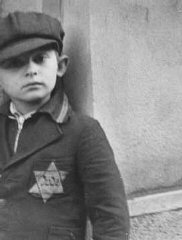
01.09.41 All Jews above the age of six are to wear a six-sided black star on yellow cloth in public. It is to be worn visibly on the left side and is to be firmly sewn on.
Jews are prohibited from leaving their residential area without the written permission from the local police authority.
09.12.40 Jews are forbidden to enter the produce market in Prague II on market days and neither the surrounding streets.
26.06.41 Jews permitted to visit barbers and haircutting salons only between 8:00 and 10:00.
29.05.42 Jews prohibited from using barbers and haircutting salons. This prohibition extends to visits by barbers, etc. to Jewish homes.
17.07.41 Jews are prohibited entry to any woods open to the public within Greater Prague, including private woods.
29.09.41 Jews are prohibited from walking on either bank of the river Moldau / Vltava between the railway bridge in Smíchov and the Hlávka bridge.
06.09.41 Jews are prohibited from entering public libraries and no books are to be lent to them.
31.10.41 Jews are prohibited from walking along and in the vicinity of the castle.
04.12.41 Jews are prohibited from entering public collections, museums, exhibitions, reading rooms, picture galleries and also attend the auction of books, works of art, arts and crafts objects as well as exhibitions of same.
12.12.41 Jews are prohibited from visiting the Xmas fair on the Charles Place.
02.01.42 Jews are prohibited from crossing the park at the National Museum.
05.06.42 Jews are prohibited from entering Wenceslaus Sq. and approaches from Saturday 15:00 to Monday 8:00 hrs. Likewise the main railway station and approaches, likewise the approach roads leading to the Zoo.
23.06.42 Use of trains. In addition to previous orders Jews are not permitted to use porters, waiting rooms, refreshment stalls, etc.
7. THE REMOVAL OF JEWS FROM INDUSTRY AND COMMERCE
21.06.39 By order of the Reichsprotektor of Bohemia and Moravia concerning Jewish property it is declared by para.9 that trustees can be appointed to manage it.
23.10.39 By the order dealing with the dismissal of Jewish employees it is declared that contracts of employment containing a period of notice are changed to six weeks from the first of any month.
All rights to claims for entitlement to pensions, compensations, severance, are extinguished. A once-only severance pay of a maximum of half a year's salary can be paid.
26.01.40 By order of the Reichsprotektor etc. concerning the removal of Jews from the economy it is declared the Jewish ownership / management of economic places of work of any sort is prohibited. Such businesses, where the management is prohibited, are to be dissolved and wound up
31.03.41 Jews are prohibited from managing industrial undertakings of the following kind:
a) Wholesale and retail on own or outside account, b) Restaurant and catering trade, c) Insurance brokerage, d) Shipping, e) Removal and storage, f) Travel agency, g) Tourist guide, h) Transport and haulage business including hire of lorries and haulage vans, i) Banking and money exchange, j) Pawn broking, k) Information and collection agency, l) Security services, m) Vending machine installation, n) Advertising agency, o) Estate and mortgage agency, p) Professional employment agency, q) Marriage bureau
11. SPECIAL REGULATIONS
03.06.40 By order of the Reichsprotektor the keeping of pigeons of any sort, even temporarily, is prohibited.
20.07.41 Jews are not entitled to receive compensation for war damage.
01.09.41 Jews are not permitted to wear medals, decorations and other insignia.
21.09.39 The order concerning the postponement of impounding and bankruptcy does not apply to Jewish debtors.
25.09.40 The preferential treatment concerning sales tax which applies to private scholars, artists, Writers, commercial agents and brokers does not apply to Jews.
08.04.41 Jews are prohibited from playing the lottery.
10.10.40 Jews are not eligible to obtain clothing coupons.
18.01.41 Jews are excluded from the purchase of apples.
08.12.41 Jews are excluded from obtaining oranges and mandarins.
13.06.41 Jews are excluded from special sugar allocation.
29.08.41 Jews are excluded from any special allocation of pulses.
25.10.41 Jews are not entitled to receive shaving soap.
01.10.41 Jews are excluded from any allocation of tobacco.
16.10.41 Jews are not entitled to receive marmalade and jam.
23.10.41 It is an offence to sell to Jews: fruit of any sort, fresh, dried or preserved, incl. nuts, also marmalade, jams, cheese, sweets, fish and fish products of any sort, as well as poultry and game of any sort. This prohibition applies to producers, processors, traders and consumers.
Jews are excluded from the allocation of coffee during Xmas 1941.
21.11.41 Jews are excluded from the purchase of carp.
27.11.41 Jews are excluded from the purchase of wines and spirits.
08.11.41 Jews are excluded from receiving onions.
Jews are excluded from receiving garlic.
15.01.42 The sale of pork to Jews is prohibited.
23.01.42 The sale of hats and caps to Jews is prohibited.
02.03.42 Aryan doctors are not permitted to prescribe additional food for sick Jews. This can only be done by Jewish doctors and the front page of the application must have the word "Jew" written diagonally across it in red ink.
For sick Jews the following must not be prescribed and approved the following: butter, pork dripping, meat, fat and rice. Such applications will be put before German doctors for checking and approval. Persons are considered Jews who are obliged to wear the Jewish star.
03.04.42 The sale of bags made of leather, textiles or other materials as well as the of suitcases, briefcases, handbags, purses of any kind, travel utensils, belts, shopping bags, etc. to Jews is prohibited.
05.05.42 Jews are excluded from receiving dried onions.
12.05.42 Jews are excluded from the sale of dried fruit (raisins, prunes, hazelnuts and walnut kernels).
08.02.41 Jews are excluded from the practice of fishing and from all related activities whether as owners of fishing rights or assistants.
12.01.42 The sale of Czech newspapers to Jews, directly or indirectly, is prohibited.
01.05.42 The sale of German newspapers to Jews is a punishable offence.
07.41 Pets, such as dogs, cats, birds, in the possession of Jews and their Aryan dependants, are to be handed in.
12. CULTURE
15.11.39. Jews were removed from German high schools.
12.07.39. Jewish pupils were excluded from German secondary schools. In Czech schools only 4% of the total number of pupils was permitted to be Jewish.
07.08.40 The enrolment of Jewish pupils in schools where Czech is language of instruction was forbidden from the beginning of the school year 1940/41 in public as well as non-Jewish private schools.
10.09.41 The public performance and mechanical reproduction of works of music where Jews participate as composers, editors of compositions or are participating as practicing artists is forbidden.
This prohibition also extends to works of music by non-Jewish composers where the words used are by Jewish librettists.
07.42 The closure of Jewish schools was decreed and every public as well as private tuition of Jewish children is forbidden.
13. OTHER POLICE MEASURES
09.39 Jews are not permitted to leave their homes after 8 o'clock in the evening.
23.09.39 Jews had their radios confiscated.
01.03.40 Jews had to have their identity papers endorsed with a "J".
23.01.41 Jews had to hand in their driving licences.
All schools of motoring in the Greater Prague area were forbidden to accept Jews for training.
10.41 By order of the Deputy Reichsprotektor all synagogues and prayer rooms of the Jews in the Protektorate of Bohemia and Moravia are to be closed.
21.02.42 The use of all types of public laundries by Jews is prohibited.
21.02.43 The acceptance of dresses and other objects from Jews for the purpose of dying and chemical cleaning is prohibited.
Jewish Living Space
The number of Jewish homes on 01.10.1940 stood at 14,920. Through resettlement and change of residence (euphemisms for deportation with the object of murder at the destination and for the clearance of district of Jews and housing several families where one had lived before) 4,476 homes were freed (of Jews).
Through emigration and transfer to the ghetto of Theresienstadt a further 8,191 homes were freed. Of these 2,901 dwellings were cleared completely by the removal of furniture, furnishings and chattels which corresponds to an area of 232,080 sq.metres. 5,200 homes with an area of 416,000 sq. metres remain to be cleared.
The freed homes were put at the disposal of the housing office of the NSDAP (the National Socialist German Workers' Party).
The Economic Significance.
The management of the homes, their furniture and furnishings/chattels left behind (by departed/deported Jews) represents work of national economic magnitude, because even in peacetime comparisons could not be made with even the largest department stores and warehouses.
In wartime such work must be valued much more highly in that the production of such goods, such as one is dealing here, has to come second behind the more important demands of the defence industry. The rational preservation and allocation of these valuable goods, which are presently irreplaceable, demands an economical approach guided by expert principles as well as proper and caring treatment.
Particular care must be taken with objects of cultural and historical value, particularly works of art, which are judged by selected experts and put into special stores. The following overview provides a picture of the magnitudes acc. to categories.
The first column represents the already seized dwellings, the second column the numbers still to be seized, the third column is the expected total.
Seized Still to be seized Total
Works of art 10,458 18,800 29,258 Articles of closing 1,025,496 1,846,000 2,871,496 China and glass 364,993 657,000 1,021,993 Kitchen and domestic equipment 1,045,088 1,881,000 2,926.088 Pianos 436 784 1,220 Powered refrigerators 116 208 324 Sewing machines 1,159 2,080 3,239 Electrical appliances 22,012 39,600 61,612 Books 547,458 985,000 1,532,458 articles of food and cleaning, kg 41,113 74,000 115,113 carpets 18,985 34,000 52,985 pictures 51,734 93,000 144,734 technical and optical instruments 3,755 5,000 8,753 medical instruments and medicines 48,029 86,000 134,029 coal, wood, in kg 714,577 500,000 1,214,577
The above list does not include items already confiscated, such as: radios, on 22 Sept.1939, skiing gear, gramophones and gramophone records, on 20 Dec.1941, musical instruments, cameras incl. attachments and measuring devices on 26 Dec.1941.
Most importantly, items of gold, platinum and silver as well as precious stones and Pearls which Jews had to list and the list had to be deposited by 31 July 1939, all as described under "Taking possession of Jewish property.”
Likewise personal bank accounts, shares and similar property had to be declared by that date and was later either confiscated or subject to special taxes with the same result.
Medical inventory in Bohemia and Moravia :
No. of pieces of equipment seized from Jewish doctors : 828
Put at the disposal of : The German health service : 774
The Jewish ghetto of Theresienstadt : 54
In Bohemia and Moravia were seized and put to use:
Bicycles 3,503 Typewriters 2,036 Furs and items made of fur 34,543
Sources:
"Židé v Protektorátu. Hlášeni židovské náboženske obce v roce 1942"
"Juden im Protektorat von Böhmen und Mähren. Dokumente"
(Jews in the Protektorat of Bohemia and Moravia. Reports by the Jewish Community Offices in the year 1942. Documents.")
Joint authors : Helena Krejčová, Jana Svobodová, Anna Hyndráková.
Published by Maxdorf and the ústav pro soudobné dějiny (USD), (Institute for contemporary history) Czech Republic, 1997
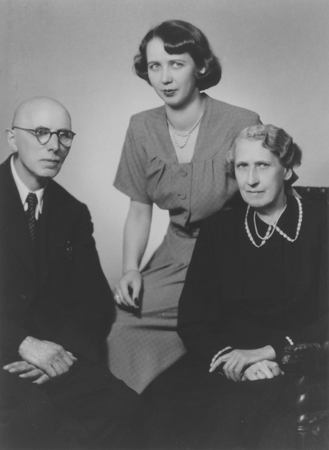
Portraits from the Album of David Friedman
Copyright: Frank Bright with assistance from Chris Webb H.E.A.R.T 2008
|